

Millions of Refugees Need Access to Cleaner, More Efficient Cookstoves and Fuels
23.06.2015
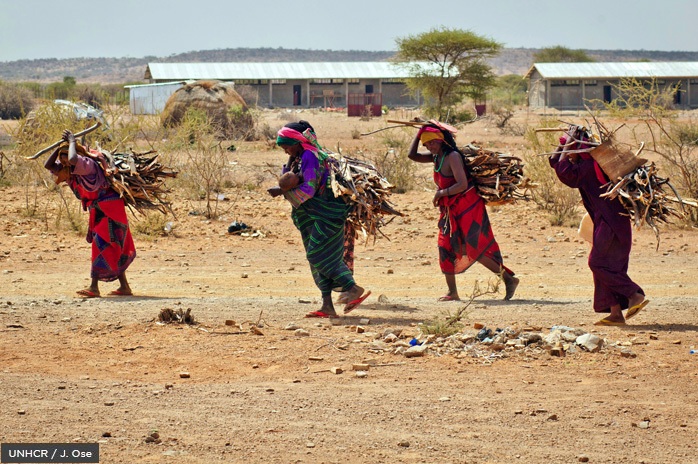
While millions of refugees receive food from humanitarian agencies, the food still needs to be cooked before it can be eaten. Yet without access to modern cookstoves and fuels, women and children must risk their safety, health, and sometimes their lives, to search for and collect firewood in order to cook over smoky, polluting open fires that damage health. As we commemorate World Refugee Day, now is the time to raise awareness about this critical issue and to encourage decision makers to address the urgent need for increased access to cleaner and more efficient cookstoves and fuels and to help ensure the dignity and safety of refugees around the world. Displaced women often must walk for hours to find firewood and carry loads of 20 kg or more back to camp, which puts them at risk for physical and sexual attack, dehydration, and physical injury. In fact, a 2014 UNHCR assessment in Chad found that 42% of refugee households experienced incidents of assault, attempted rape, rape, or other forms of sexual gender based violence during firewood collection over a six month period. At night, lack of access to lighting further increases women’s vulnerability when navigating camps to use latrines and other services. Women and children in refugee camps are also exposed to health risks, including respiratory infections from smoke produced by inefficient stoves and fuels. A review in the Journal of Conflict and Health in 2010 stated that acute respiratory infections (ARIs) such as pneumonia are the leading cause of mortality among children under five worldwide. Yet they receive comparatively little attention in humanitarian relief policies despite the fact that in crisis settings the burden of ARIs tends to be exponentially greater than in non-crisis settings. In Nepal, for example, ARI mortality rates were roughly 10-17 times higher among refugee populations than among those in non-crisis settings. In Burundi, mortality rates from ARI were four times higher among refugees than their non-displaced peers (Bellos et al., Journal of Conflict and Health, 2010).
For more information…
For more information…